What Are High-Altitude Stations (Haps) Explained
1. HAPS Occupy a Sweet Spot between Earth and Space
It is time to forget the binary distinction of ground towers and orbiting satellites. High-altitude platform stations operate in the stratosphere, usually between 18 and 22 kilometers above sea level – an atmosphere that is which is so tranquil and stable that a well-designed aircraft can maintain its position with astounding precision. The altitude is sufficient to allow for huge geographic footprints by a single vehicle but close enough to Earth that latency in signal transmission stays low and the hardware doesn’t have to endure the extreme radiation conditions that are characteristic of space. This is an unexplored portion of sky and the aerospace industry is just taking the first steps to make it a reality.
2. The Stratosphere’s Calmness Is Much Better Than You’d Expect
One of the most bizarre facts about stratospheric flights is how stable the environment is when compared to the turbulent atmosphere below. At the stratospheric level, the winds are comparatively gentle and uniform that is crucial for station keeping, which is the capacity of the HAPS vehicle to stay in its position in the specified area. For telecommunications or earth observation missions, even some kilometres from position could reduce the coverage quality. platforms designed for complete station keeping, like those designed by Sceye Inc, treat this as a crucial design aspect instead of as an afterthought.
3. HAPS stands for High-Altitude Platform Station
The definition in itself is worth delving into. Platform stations at high altitude are specified in ITU (International Telecommunication Union) frameworks as a facility located on the surface of an object that has an altitude of between 20 and 50 km at a defined, nominal permanent position with respect to Earth. The “station” element is deliberate They aren’t research balloons floating across continents. These are observation and telecommunications infrastructures that are anchored on a station which are performing continuous missions. Consider them less like aircraft, and more as low-altitude satellites that are reusable and have the capability to be repaired, returned and re-deployed.
4. There are different types of vehicles under the HAPS Umbrella
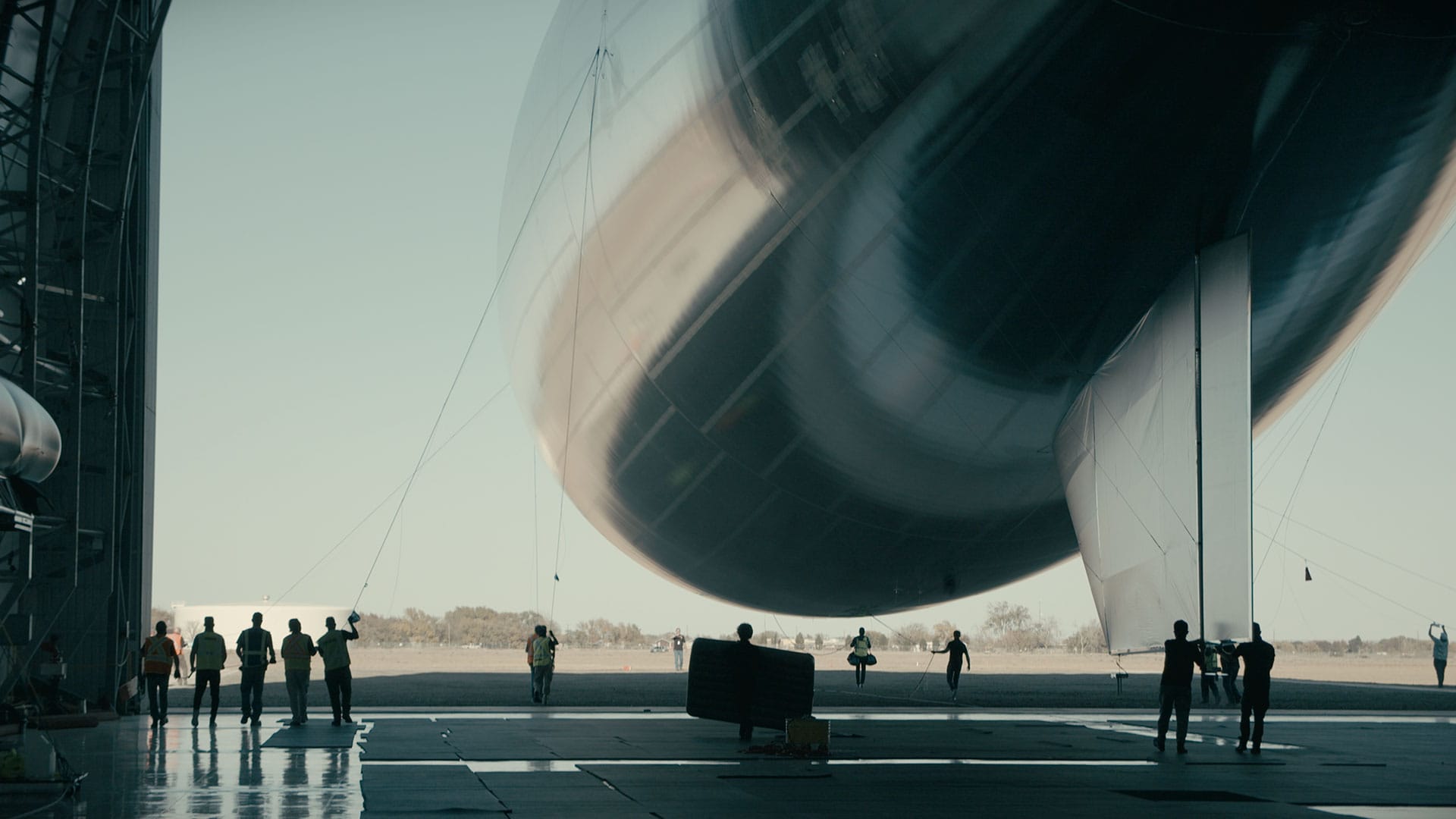
Not all HAPS vehicles look alike. The class includes solar-powered fixed-wing aircrafts as well as lighter-than air airships as well as tethered balloon systems. There are trade-offs in payload capacity, endurance, and price. Airships for example, are able to carry heavier payloads over longer periods since buoyancy does most of the lifting leaving solar energy to power stations, propulsion including onboard electronics. Sceye’s system employs a lighter than air airship design specifically to maximise the capacity of payloads and endurance of missions and mission endurance. It is a thoughtful architectural option that differentiates it from fixed-wing competitors chasing altitude records with little or no load.
5. Power Is the Central Engineering Challenge
Keeping a platform aloft in the stratosphere for months or even weeks without refuelling is solving an energy equation with minimal margin of error. Solar cells store energy in daylight hours, however the platform must survive the night without power stored. This is where battery energy density becomes vital. Improvements in lithium-sulfur battery chemical chemistry — with energy density close to 425 Wh/kg make the possibility of completing a long-distance mission increasingly viable. With a boost in solar cell efficiency, the goal is a closed power loop which generates and stores enough energy per day to ensure that the operation continues uninterrupted.
6. The Coverage Footprint is awe-inspiring in comparison to Ground Infrastructure
A single high altitude platform station at 20 km high can create a terrain of hundreds of kilometers. A standard mobile tower can cover only a few kilometres. This dissimilarity makes HAPS very appealing for connecting rural or remote areas where the development of infrastructure on land is economically prohibitive. A single stratospheric vehicle can fulfill the tasks that normally require hundreds or thousands of ground-based assets — making it one of the most credible proposed solutions to the lingering global connectivity gap.
7. HAPS may carry a variety of payload Different types simultaneously
Contrary to satellites who are usually locked into a fixed mission profile when they launch, stratospheric platforms may carry mixed payloads and be changed between deployments. A single vehicle could carry an antenna for broadband transmission, along with sensors for greenhouse gas monitoring, wildfire detection, or surveillance of oil pollution. The multi-mission flexibility is one of the top economic arguments for HAPS investment. The same infrastructure could serve connectivity and monitoring of climate, instead needing separate assets for every function.
8. The Technology enables Direct-toCell and 5G Backhaul Applications
From a telecommunications perspective The thing that the thing that makes HAPS special is its compatibility with existing ecosystems for devices. Direct-to?cell technologies allow standard smartphones to connect without specialized hardware, while the platform functions as a HIBS (High-Altitude IMT Base Station) that’s essentially a cellphone tower suspended in the skies. It can also function as 5G backhaul, connecting remote earth infrastructure to other networks. Beamforming technology lets this platform to channel signal precisely to areas that have demand rather than broadcasting in an indiscriminate manner which increases the efficiency of the spectral.
9. The Stratosphere Is Now Attracting Serious Investment
What was a niche domain just a decade ago, has received significant funding from major telecoms companies. SoftBank’s partnership with Sceye for a planned national HAPS system in Japan with the intention of launching pre-commercial services in 2026, is one of the biggest commercial commitments to stratospheric connectivity to today. It is a signal of a shift in HAPS being viewed as an experiment becoming a deployable and revenue-generating infrastructure — the kind of validation that can benefit the wider industry.
10. Sceye Represents an Innovative Model for a Non-Terrestrial Infrastructure
It was founded by Mikkel Vestergaard and based out of New Mexico, Sceye has positioned itself as a serious long-term contender in what’s genuinely frontier aerospace territory. Sceye’s emphasis on combining endurance, payload capabilities, and multi-mission capabilities is indicative of a belief that stratospheric platforms will eventually become a durable layer of global infrastructure — not a novelty or a gap filler, but a true third layer that will sit between terrestrial satellites or orbital satellites. For connectivity, climate monitoring or disaster response, high elevation platforms are beginning to appear less like an exciting concept and more like an essential part of the way that humanity monitors and connects to the world. View the recommended detecting climate disasters in real time for website advice including softbank sceye partnership, Stratospheric telecom antenna, sceye disaster detection, Sceye News, sceye haps softbank partnership, sceye haps softbank, sceye haps softbank partnership, whats haps, marawid, Stratospheric infrastructure and more.
SoftBank’S Pre-Commercial Haps Services What’s In Store For 2026?
1. The Pre-Commercial Event is a Specific and meaningful Milestone
The terms used in this case are important. The pre-commercial market is particular phases of development of any new communications infrastructure. They go beyond experimental demonstration, beyond proof of-concept flight campaigns, and then into the areas where real users enjoy real-time service at conditions that mimic what a fully commercial deployment might be. This means that the platform can be maintaining its position reliably, signals are meeting quality thresholds that the actual applications depend on and that the ground infrastructure can communicate to the stratospheric telecommunications antenna appropriately, and the required regulatory approvals are in place to work over populated areas. Reaching pre-commercial status is not an objective for marketing. It is an operational one, which is why the announcement that SoftBank has made public statements about reaching it in Japan in 2026 sets the bar for what the engineering both parties of the partnership need in order to get over.
2. Japan is the most appropriate country to Begin This Challenge
Picking Japan as a place to conduct advanced pre-commercial services in the stratosphere isn’t a choice based on. Japan has a variety of attributes that make it close to perfect for a first deployment setting. The country’s geography — mountains, terrain, thousands of inhabited islands lengthy and complex coastlines — pose real issues of coverage that stratospheric architecture is designed to deal with. The regulatory framework is advanced enough to address the spectrum and airspace concerns that stratospheric activities raise. The existing mobile network infrastructure, managed by SoftBank serves as the integration layer that the HAPS platform needs to connect to. And its inhabitants have the device ecosystem as well as the digital literacy required to access stratospheric broadband services without needing any time of technology adoption which would slow down meaningful adoption.
3. Expect Initial Coverage to Focus on under-served areas and Strategically Important Areas
Pre-commercial deployments shouldn’t try to provide coverage across the entire country at once. More likely is focused deployments targeting specific areas where the gulf between existing coverage and the benefits that stratospheric connectivity will provide is the greatest and the strategic advantage of priority coverage is strongest. In Japan’s situation, that is the case for island communities that are currently dependent upon expensive and inadequate connections to satellites. It also includes mountains and regions in which the terrestrial economy has never been able to sustain adequate infrastructure or coastal regions where resilience to disasters is a national priority given the risks of the country’s earthquake and typhoon exposure. These areas provide the most convincing evidence of connectivity’s value and the most useful operational data for refining the coverage, capacity, and platform management prior to the broader rollout.
4. Its HIBS Standard Is What Makes Device Compatibility Possible
One of the questions anyone should ask when discussing stratospheric Internet is whether it will require special receivers or works with ordinary devices. Its HIBS Framework — High-Altitude IMT Base Station -is the basis of standards to this question. In conforming to IMT standards which are the foundation of 4G and 5G networks globally, the stratospheric platform functioning as a high-speed base station is compatible with the smartphone and device ecosystem already available in the area of coverage. For SoftBank’s Pre-commercial services it means that subscribers within area coverage should be in a position to connect to the stratospheric internet using their current devices without having to buy hardware — an essential requirement for any business that is aiming to reach out to the population who live in remote regions who need alternatives to connectivity as well as are the least equipped to buy specialist equipment.
5. Beamforming Can Determine How Capacity is Distributed
A stratospheric-type platform that covers a vast area won’t provide the same useful capacity across the area. The way that spectrum and signal energy are allocated across the coverage region is dependent on beamforming capabilities — the platform’s capability in directing signals to areas the regions where demand for services and users are most concentrated, rather than broadcasting evenly across vast areas that aren’t inhabited. The pre-commercial phase of SoftBank’s business, the proof that beamforming with an antenna that is stratospheric can give commercially sufficient capacity to certain areas of a large coverage area is more important than demonstrating coverage area. The wide coverage footprint, with its thin, non-usable capacity does not prove much. Targeted delivery of genuinely usable broadband to specific areas of service proves the commercial model.
6. 5G Backhaul applications could precede Direct-to-Device Services
In some scenarios, the first and most straightforward way to verify the use of stratospheric connectivity isn’t direct-to-consumer broadband but rather 5G backhaul that connects existing ground infrastructure in areas where terrestrial backhaul isn’t sufficient or inaccessible. Remote communities may have the basic network equipment, however, it’s not connected to the wider network that makes it useful. A stratospheric network that offers that backhaul link extends functional 5G coverage to the communities that are served by ground equipment that is already in place without the requirement for end users to engage directly with the stratospheric infrastructure. This type of use-case is easier to prove technically, has clear and measurable value, and gives operational confidence to the performance of the platform before the more complex direct device-to-device component is added.
7. The Sceye Platform’s Performance 2025 sets up the Future for 2026.
Pre-commercial service targets for 2026 is entirely contingent on what Sceye HAPS Sceye HAPS airship achieves operationally in 2025. The validation of station-keeping and payload performance in real conditions of stratospheric temperatures, energy system behavior across a range of diurnal cycles, as well as the integration tests required to verify that the platform functions correctly with SoftBank’s networking architecture all require maturity before commercial services can start. Updates on Sceye HAPS airships’ status up to 2025 will not be considered as minor reports, they are the primary indicators of whether the 2026 milestone is tracking within the timeframe or creating the kind amount of technological debt which pushes commercial timelines. What happens in the engineering department in 2025 is the 2026 narrative being developed in advance.
8. Disaster Resilience is a Tested Capability, Not A Claimed One
Japan’s high risk for disasters means that any pre-commercial stratospheric services operating across Japan will almost always encounter circumstances — such as earthquakes, typhoons and infrastructure disruption — that test the resilience of the platform and its potential as a emergency communications infrastructure. This isn’t a restriction of the deployment. It is one of its top features. A stratospheric platform that maintains station connectivity and observation capabilities during large earthquakes or weather event in Japan is an example that no amount of controlled tests can duplicate. The SoftBank pre-commercial phase will generate concrete evidence of how the infrastructure works when terrestrial networks are disrupted — exactly the evidence that any other potential operators in disaster-exposed countries will need to observe before committing their own deployments.
9. The Wider HAPS Investment Landscape Will Respond to What Happens in Japan
It is true that the HAPS area has attracted significant investments from SoftBank and others, but the larger telecoms and infrastructure investing community remains in the midst of a watchful brief. Large institutional investors, national telecoms operators in other nations and government officials who are looking at stratospheric infrastructure for their surveillance and coverage requirements are all following what happens in Japan with considerable attention. An efficient pre-commercial deployment- platforms on station and services that are operational, as well as performances that meet thresholds- will accelerate investment decisions across the industry with a speed that ongoing demonstration flights and partnership announcements can’t. Similarly, large delays or shortfalls in performance could prompt the recalibration of timelines across the sector. The Japan installation is an incredibly significant issue to the whole stratospheric networking sector, not only The Sceye SoftBank partnership specifically.
10. 2026 Will Determine if Stratospheric Connectivity has crossed the Line
There’s a distinct line in the evolution of any disruptive infrastructure technology between the stage where it’s promising and the point at which it’s a real. Mobile networks and internet infrastructures have all crossed this limit at certain points -, not necessarily when it was initially tested, but when it was first functioning with enough reliability that both institutions and individuals started to plan around its existence than its potential. SoftBank’s precommercial HAPS service in Japan are the most plausible in the near future for the moment at which stratospheric connectivity will cross that line. If the platforms will be able to support stations throughout Japanese winters, if beamforming system is capable of providing enough capacity to island communities, and whether they are able to operate under the type of weather conditions Japan frequently encounters will determine whether 2026 will be celebrated as the date when the stratospheric internet became real infrastructure or when the timeline was reset. Take a look at the recommended softbank investment sceye for site tips including 5G backhaul solutions, Stratospheric broadband, softbank haps pre-commercial services japan 2026, sceye disaster detection, sceye aerospace, Sceye stratosphere, what’s the haps, Sceye HAPS, Monitor Oil Pollution, what does haps stand for and more.
